A Cinematic Journey into Truth, Post-Truth, and Collective History
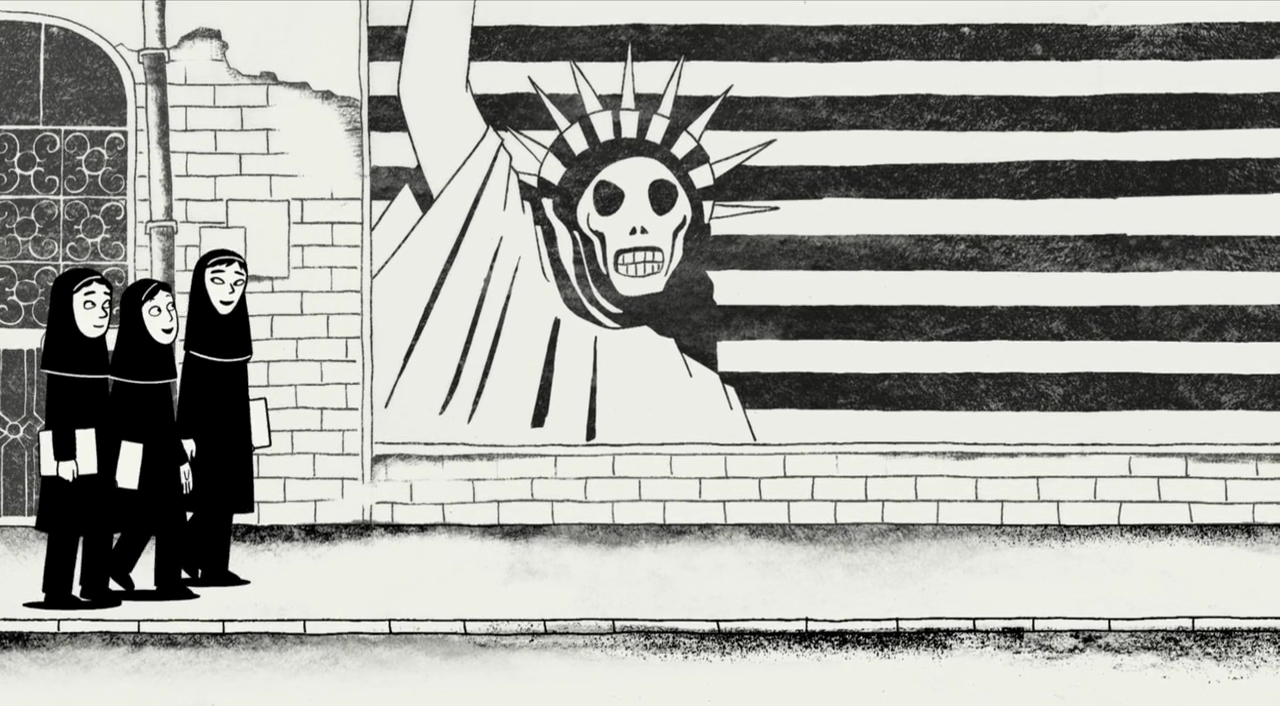
In an epoch that seems increasingly riddled with questions about truth and representation, cinema serves as a rich playground for deep thoughts and conversation. Focusing on three exceptional animated post-doc works — Chris Marker’s “Sans Soleil” (1983), Ari Folman’s “Waltz with Bashir” (2008), and Marjane Satrapi’s “Persepolis”— we delve into the labyrinthine corridors of human memory, post-traumatic experiences, and collective history.
Sans Soleil: Memory’s Polychromatic Mosaico
Chris Marker’s “Sans Soleil” is a peripatetic travelogue that subverts conventional boundaries, creating a polysemous collage of human memory and Japanese philosophy. Interwoven through its tapestry is an ode to Andrei Tarkovsky’s “Stalker,” evoking a sense of liminality. “Sans Soleil” is a kaleidoscopic meander through diverse landscapes, both physical and cerebral, that questions the very ontology of memory. Its intertextuality serves as a cerebral conduit for audiences to meditate on the complexities of our shared human history.
Waltz with Bashir: A Dance of Forgetting and Remembering
Ari Folman’s autobiographical “Waltz with Bashir” ventures into the murky terrains of Lebanon’s 1982 war, with a focus on the slippery ephemerality of memory. This semi-animated odyssey employs visual and aural motifs that imbue the narrative with layers of disquiet, distancing, and surrealism. At its core, the film examines the illusory construct of lived violence and delves into the idea of post-trauma and post-memory. The film goes beyond telling war stories; it digs into the complexities of post-traumatic stress and how our memories sometimes shield us from hard truths.
Persepolis: A Personal Lens on Historical Events
Marjane Satrapi’s “Persepolis” manages to be both a touching memoir and a candid political memory, chronicling a life caught in the crossfire of Iranian history. Presented through a monochromatic palette, the graphic novel-turned-film cuts through the clamor of historical events to narrate a deeply personal story of revolution, culture, and self-discovery. Its eloquence lies in its simplicity, amplifying the universality of Satrapi’s experiences. Here, the personal is indeed political, showing us the impact of grand historical events on a single life, while also giving us a window into a shared past.
Cinema as a Mediator of Reality
These films do more than entertain us; they function as palimpsests where truth, memory, and collective history collide and commingle. Though each film covers different parts of the world and points in time, they come together in a common pursuit: to explore what it means to remember and forget, to tell stories and to hear them, and to be both creators and consumers of our shared narratives.
As we navigate an era filled with “fake news” and rewritten histories, these films challenge us to question the stories we tell ourselves. They invite us to reconsider how flexible and sometimes unreliable our memory can be, encouraging us to take a second look at the stories that shape us.

Sign up for our freshly baked posts
Get the latest culture, movie, and urban life updates sent to your inbox.
Subscribe
Join a bunch of happy subscribers!
 POSTMODERN PROMETHEUS
You must be logged in to post a comment.