The Dark Side of the City: Part I
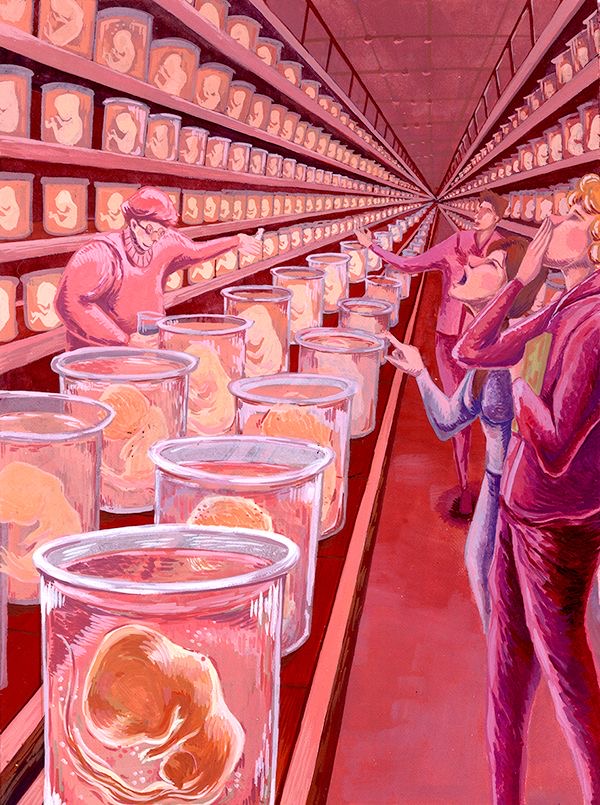
Here we are back to our current issue series, “The Dark Side of the City,” where we continue to peel back the layers of our ever-complex urban tapestry. Today, we dig deeper into something that may seem like a relic of dystopian fiction but is increasingly bleeding into our very reality: the ethical quandary of genetic engineering. it’s an urgent dialogue we need to have, akin to debating if Pandora should open the box or let it gather dust.
Chapter 1: A glimpse of Proto-Eugenics in art
If anyone today fights against modern civilization, they are essentially fighting against a coffer maker — it’s not a Don Quixote mistake, it’s a sheer foolishness.
Remember C.S. Lewis’s “The Hideous Strength”? It’s a literary wormhole that transports you to a chilling utopia — or should we say dystopia? — where human essence is steamrolled by a techno-scientific monolith. In the novel, the fictional scientistic institute dreams of a future purged of organic chaos, ushering in a soulless collective consciousness, and sterilizing emotions. It’s essentially Aldous Huxley meets Orwell, but with a dash of proto-eugenics. This narrative arc reminds of the cinematic marvel “Gattaca” — another tale of emotionless, genetically-engineered Übermenschen, where one’s socio-economic status is largely determined by their genetic profile, while people conceived naturally are considered “invalid,” suffering from social prejudice and limited opportunities. The Japanese anime “Neon Genesis Evangelion”, toying with the concept of human inbreeding with mysterious beings called “Angels”, could well be puffing a pipe in the corner, nodding in agreement.
Chapter 2: The Leviathan of Neoliberal Capitalism
But this isn’t mere science fiction. Across the board, genetic modification is emerging as a totalitarian talisman, a Machiavellian tool, sanctioning a brutal, hierarchical stratification of society. It’s an archetype, really — the Leviathan of neoliberalism and capitalism, with genetic modification as a societal sorting hat. Picture it as the dark puppeteer in the theater of modern capitalism, an entity fashioning out cityscape where divisions are not just social, but biological. It’s the classic story, but now the puppet strings are laced with DNA.
Chapter 3: The Market of Genes
There was one provocative article that was meticulously dissecting the heart and brain of the “liberal eugenics”. The subject in question isn’t merely chin-stroking; the argument unfolds into an ethical and philosophical conundrum of Orphic proportions. Imagine a “genetic supermarket”, where the privileged stroll through aisles picking up IQ points, athleticism, or beauty as casually as grabbing a carton of almond milk. Yet, this isn’t just a market; it’s an ethical minefield. Do we hop into genetic supermarkets, basket in hand, and pick ‘n mix our progeny like we’re shopping for high-end couture? Or do we risk detonating a time bomb that mass-produces human facsimiles tailored to societal and gender norms? Every choice we make here echoes in the social fabric of our city; it’s like playing Sims and holding cheat codes but realizing they could corrupt the game entirely.
Chapter 4: Preordained Lives in a Spontaneous World
Here’s where it hits the fan: it’s not just about “playing God,” it’s also about obliterating the divine randomness of life. You may find yourself in a world where life isn’t a series of fortuitous accidents but a well-calculated equation, solved long before you even take your first breath. Picture a city where your destiny isn’t sculpted by choices made at the crossroads but pre-determined by a laboratory formula.
Maybe the stakes aren’t as new as we think. Injustice and inequality have long been part of our social fabric; it’s just that now, the loom could be more technologically sophisticated. We’re already planning our lives like we’re immortal, as if the climate change and rising temperatures are a myth and our resources limitless. But what if such plans could be genetically preordained? That’s a dance with destiny on a whole new level.
Chapter 5: A City in a Selfie
Now let’s circle back to what Scott McQuire, whose name we already dropped in our piece on geomedia, might think of our modern metropolis. In the age where the fear of “city-as-machine” has morphed into the acceptance of “city-as-selfie”, we are all co-authors of this new narrative. We may not admit it, but we are persistently partaking in the selfie culture, thus being not just residents but active participants in shaping the digital and genetic infrastructure of our city.
Epilogue: To Fight or Not to Fight the windmills
As we tread deeper into the complexities of modern civilization, we are left with a dilemma as old as time but as hot as your next espresso shot. But consider this: if anyone today fights against modern civilization, they are essentially fighting against a coffee maker — it’s not even a Don Quixote mistake, it’s sheer foolishness. In this high-stakes game, the choice is yours. Are you prepared to take on your nespresso machine or not?
Stay tuned for Part II of “The Dark Side of the City,” where we will navigate another twist in our ever-evolving urban saga.

Sign up for our freshly baked posts
Get the latest culture, movie, and urban life updates sent to your inbox.
Subscribe
Join a bunch of happy subscribers!
 POSTMODERN PROMETHEUS
You must be logged in to post a comment.