The Dark Side of the City: Part II
From the ethical quandaries of genetic engineering in Part I, we explore the ethical and emotional complexities that arise when the anthropomorphic replaces the human.
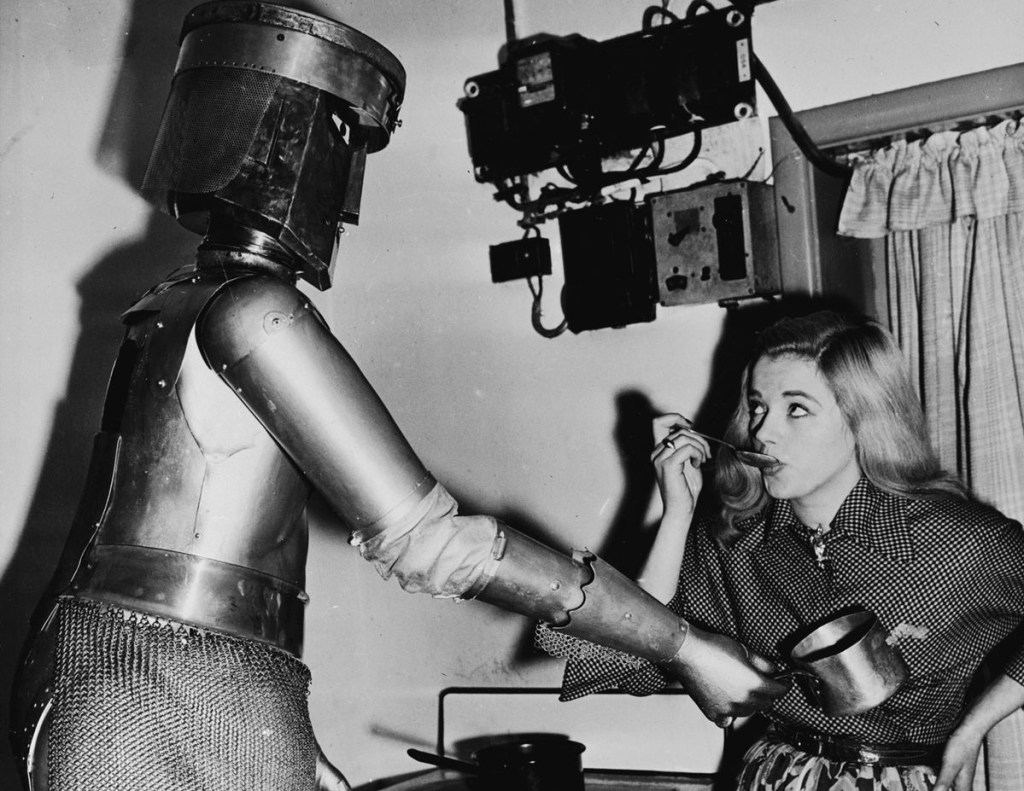
In the dim corners of the city, where neon lights paint the streets and humans coexist with their artificial counterparts, a unique story unfolds. We spotlight the compelling work of German photographer Sandra Hoyn, who captures the life of Dirk and his “wife,” a sex doll named Jane. Their years-long relationship urges us to ask: Why would someone treat a sex doll as a living, emotional partner? This provocative subject is part of our series, “The Dark Side of the City,” where we explore the uncanny, the hidden, and the culturally complex.
Jenny’s Soul: Living with a Sex Doll
Dirk’s story, featured in the “Jenny’s Soul” series, adds a touch of raw realism to our exploration of human-doll relationships. Dirk, a German native, has shared his life with his silicone companion Jenny for four years. His €6,000 investment wasn’t just for physical pleasure; it was a refuge from loneliness and past emotional scars. Jenny has become more than a mere object for Dirk; she’s a deep emotional anchor, acquiring an almost mystical presence in his life. He believes he can talk to her, hear her, and even sense her ‘soul.’
“I can´t live without love. My loneliness destroyed me.”
Dirk
Yet, Dirk keeps this relationship a well-guarded secret. Is it societal taboos or the fear of being ostracized that keeps him silent? Despite his happiness, Dirk chooses to keep their life confined to his apartment, adding another layer to our inquiry: the tension between private happiness and public judgment.
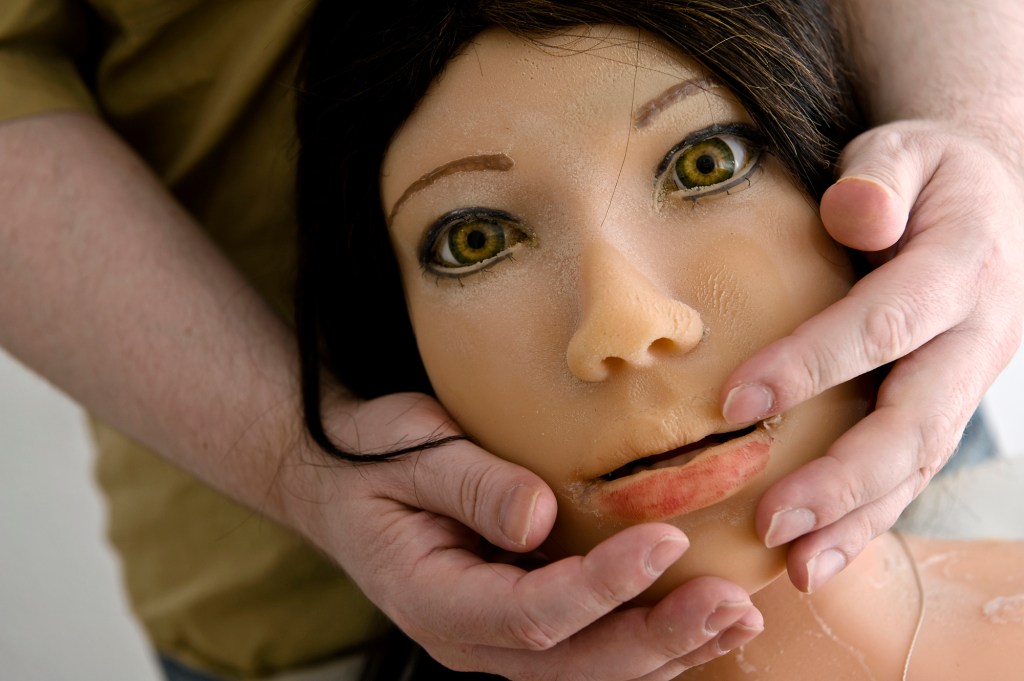
More pictures on Sandra Hoyn’s “Jenny’s Soul”
The Human and the Almost-Human
Where does one draw the line between the anthropic (≈human) and the anthropogenic (≈human-like)? What emotions do such relationships stir—disgust, curiosity, or even a strange allure?
Opinion №1:
The dance between the human and the almost-human grips and unsettles our very core. Take, for instance, E.T.A. Hoffmann’s haunting tale “The Sandman,” or those automaton dolls so lifelike they give you chills. The dilemma isn’t about being confused; it’s far more intriguing. Sandra Hoyn’s lens brilliantly captures the raw emotion and unsettling “realness” of Dirk vis-à-vis Jane, his synthetic spouse. The photos conjure a spine-tingling, Gothic atmosphere that shifts our gaze from the anthropogenic to the anthropomorphic, from the human-made to the eerily lifelike.
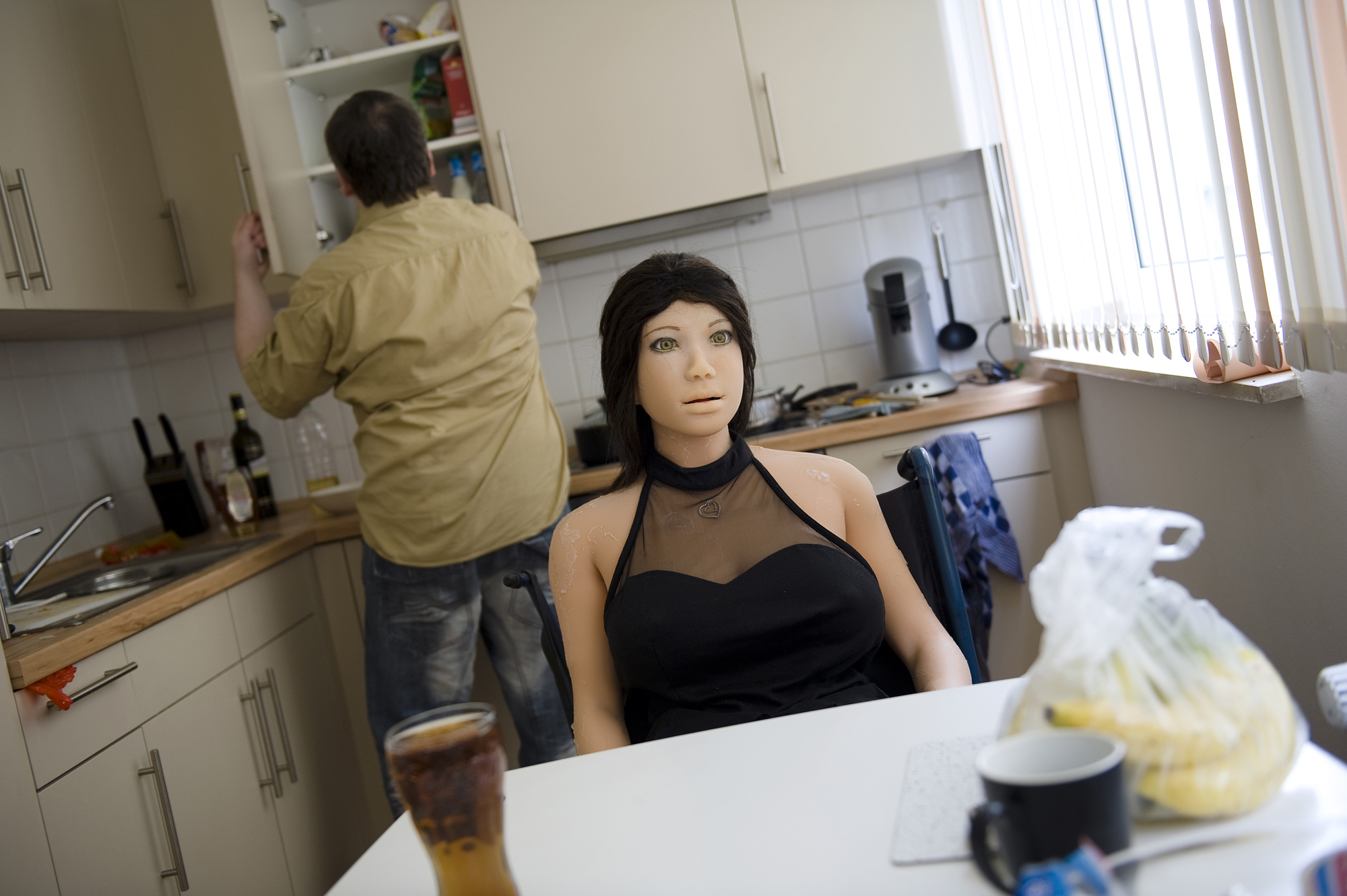



“Jenny gives me security. I never want to live without her again. I am moved from her words. The purity, serenity and honesty of her speaking.”
Dirk
So why do these relationships rattle us, especially when we’ve all had our childhood dalliances with dolls? Back then, it was all innocent play—a child’s way of decoding the world. But adulthood comes with unspoken rules, moving us from pretend to reality. When someone treats a sex doll as a living, breathing partner, it jolts our comfort zone. It’s not fear, but a sense of bewilderment that makes us push it away. These aren’t just snapshots; they’re glimpses into real, hidden lives that defy our everyday norms. And that’s what shakes us to the core—it challenges our very notions of what’s acceptable and what’s not.
These relationships could be intriguing in terms of a post-humanist subject-object paradigm, although I’m not an expert here. It also raises ethical questions about android replicants (hello, Blade Runner) and the humans who created them. This is further complicated by the Foucauldian lens of subjectification through the bodily-sexual, paradoxically transforming into the imagined subjectivity of the object.
Gender Dynamics in the Shadows
This is where the issue can be reassessed through the prism of gender studies.
Opinion №2:
In these relationships, women—or their synthetic stand-ins—are essentially reduced to mere objects catering to male desires, casting a spotlight on society’s deeply ingrained gender imbalances. Here, men are the directors, and women, or in Dirk and Jane’s case, the doll, are the passive actors. Jane becomes a silent canvas for Dirk’s supposed acts of kindness, unable to reject or even respond to his emotional gestures. What might seem like tender moments—massaging feet, bathing, combing hair—suddenly become loaded scenes when you realize there’s no female voice, no agency.

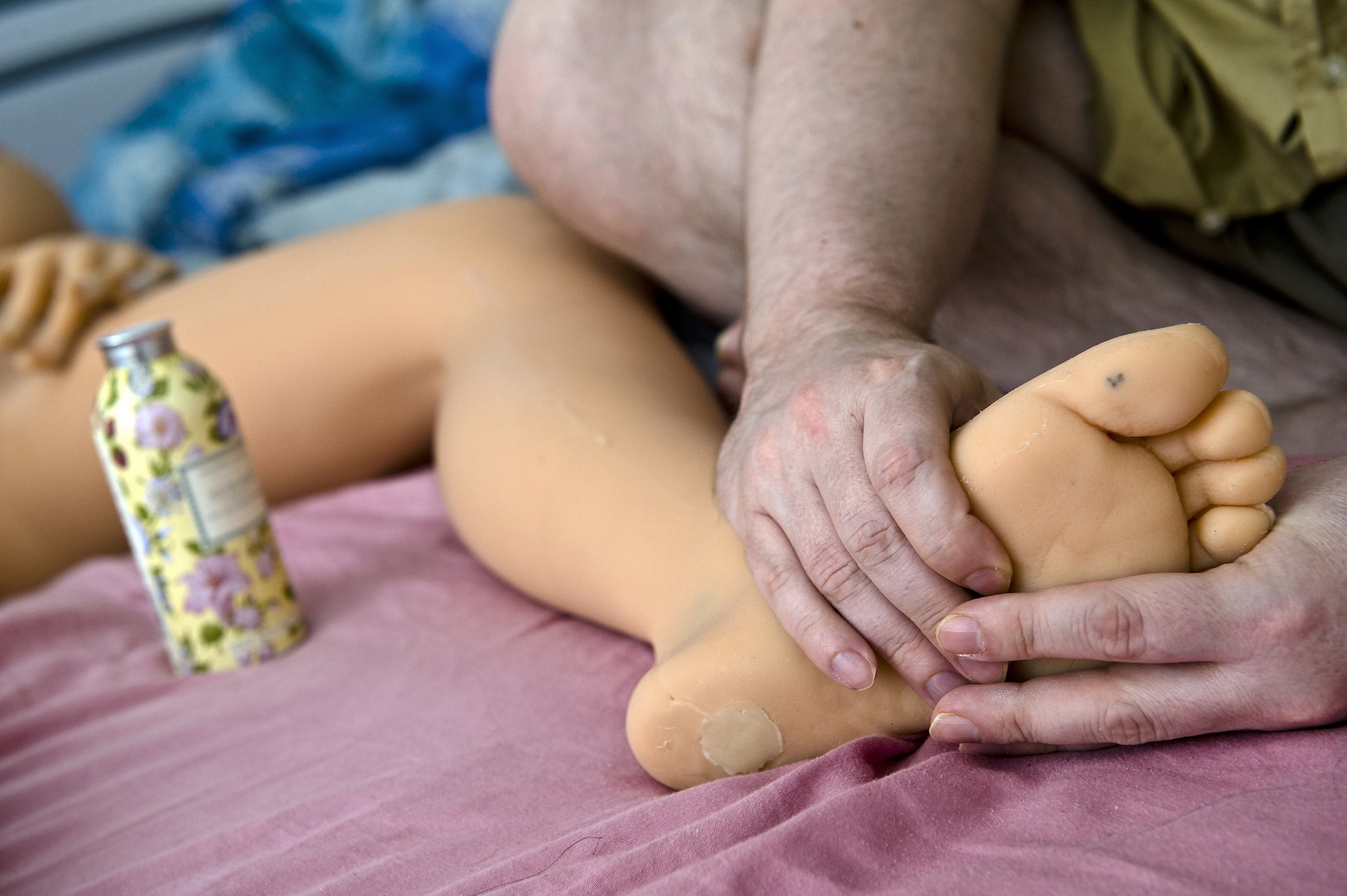
“It is a pity that I can never leave the house together with Jenny. Sometimes I would like to go with her to the cinema.”
Dirk
Whether Jane “wants” this is beside the point; she’s scripted to silently accept Dirk’s lead. “Jenny is such a sensitive being. She is so helpless”, he says. In this narrative, men aren’t responding to a partner’s desires; they’re calling all the shots, reinforcing age-old roles that society has comfortably settled into. It’s a compelling drama that forces us to question the roles we’ve been conditioned to accept, and it’s unfolding right before our eyes. “I like it when Dirk shaves. Because it is good for my silicone skin when we cuddle”, “speaks” the doll… or rather the voice coming from her owner.
The Gendered Object: When Subjectification Becomes Subjugation
Judith Butler, a leading voice in gender studies, points out a fascinating paradox in Hegel’s “Phenomenology of Spirit”: the process of subjectification results in both emergence and subjugation. Add to that the psychological elements of attachment—sensual, intimate, impassioned, or dominant—and you get a complex, unsettling picture. These dolls aren’t just inanimate objects; they become vessels for complex human emotions.

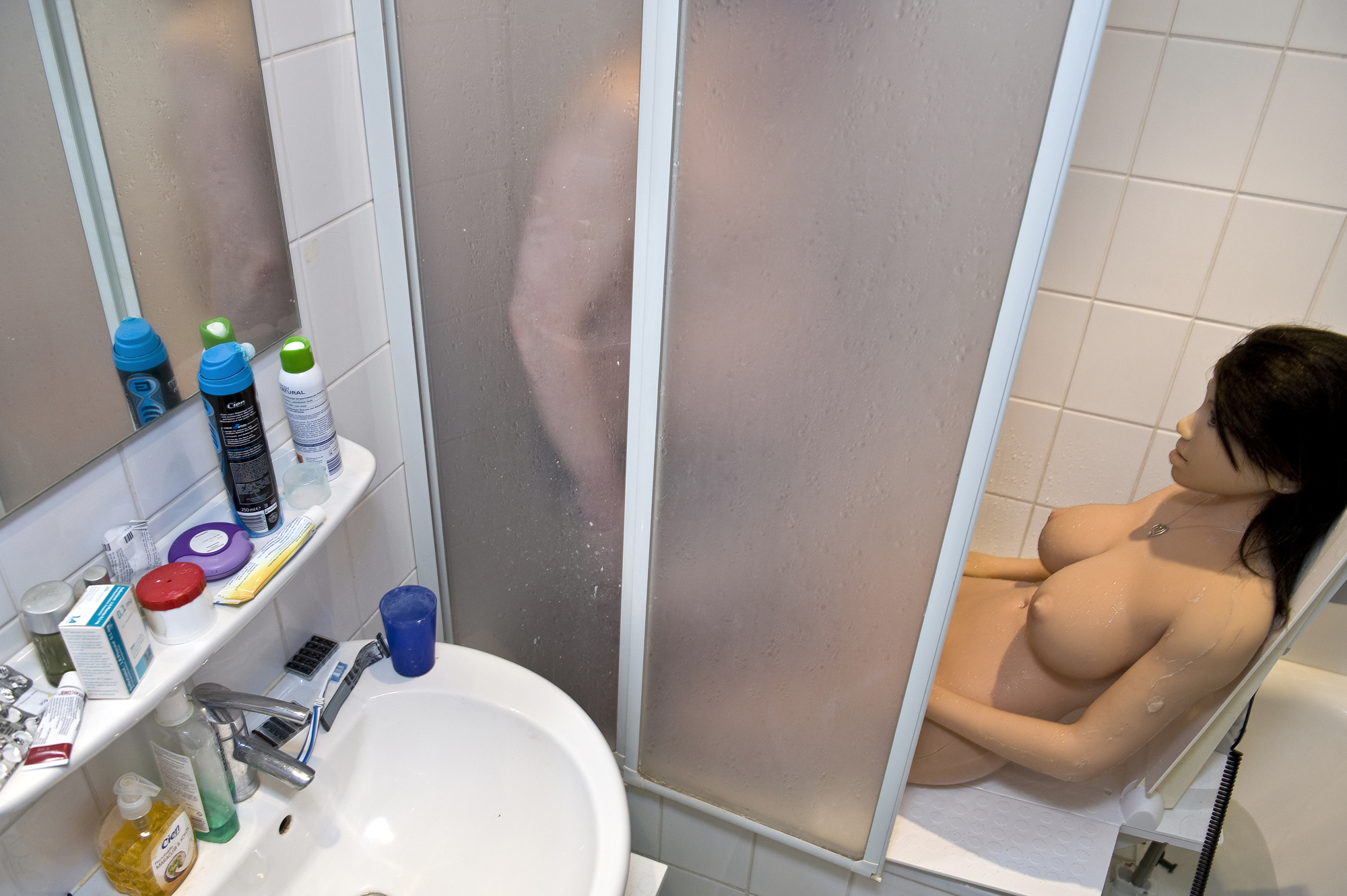
“With my ex-wives I always had to fight for love. Not with Jenny. With her I found peace. Jenny is a soul from another world. She is an energy of a world without brains and senses that we have.”
Dirk
This way, Butler adds another layer to this Foucauldian subjectification by bringing in the psychology of attachment. The doll, by its very nature, shows a form of attachment—it can’t physically push away any advances. So, the question that looms large is: Why does the man himself become emotionally tied to the doll, treating it as if it were a real person?
As we look into the hidden sides of city life and think about Dirk and Jane’s unique relationship, we get a fuller picture of what it means to be in a human-doll partnership. It’s like staring into a multi-faceted abyss that mirrors our deepest psychological quirks, ethical dilemmas, and tangled gender dynamics.
All of this in a world that’s becoming more and more entwined with the artificial and the human-like.

Sign up for our freshly baked posts
Get the latest culture, movie, and urban life updates sent to your inbox.
Subscribe
Join a bunch of happy subscribers!
 POSTMODERN PROMETHEUS
You must be logged in to post a comment.