“Reflections of an Introvert: A Personal Note from the Author on The Dark Side of the City”
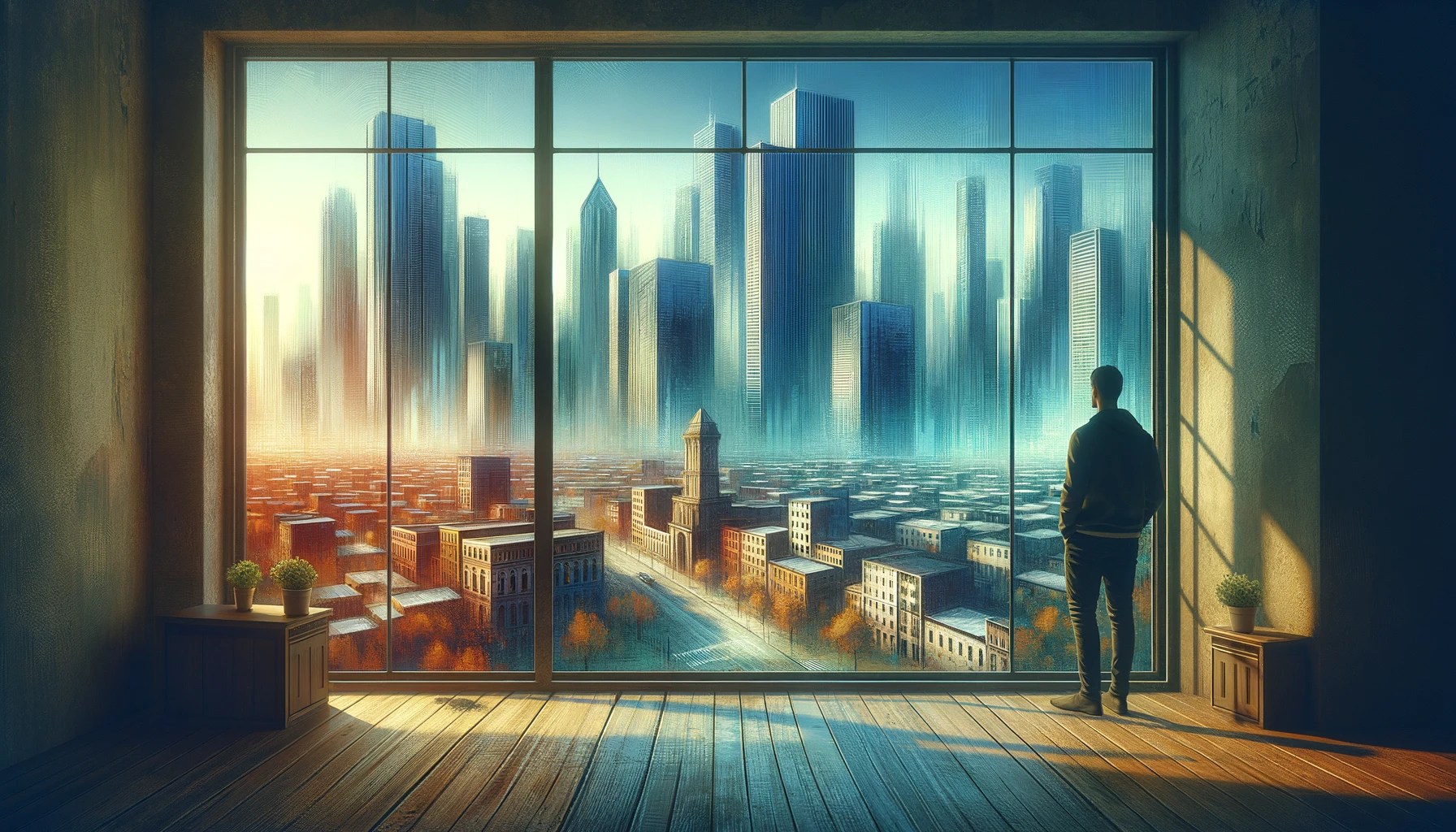
On a peaceful Sunday, away from the rush of daily life, I’m drawn back to the works of American urban planner Kevin Lynch. Unlike his more famous filmmaking namesake, David, Kevin delves deep into the urban landscape, unraveling the ‘image of the city’. His unique perspective on the cityscape isn’t about buildings or roads but about how they form an intricate web of meaning. Lynch’s ideas resonate with Roland Barthes’ semiotic theories on how we read signs and symbols in our environment. He suggests that a city’s true essence lies in its ability to evoke sensory and emotional responses, not just its functionality. This notion isn’t just crucial for urban planning but also central to modern branding strategies that seek to transform cities into not just functional spaces but sensory and human experiences.
This exploration is part of a broader trend in ‘visual turn’ in contemporary culture, an understanding how we perceive our surroundings. Every image we see — be it the iconic Colosseum or the majestic Empire State Building – is a product of our consciousness. These images are filtered through a cultural lens, as Jacques Lacan would suggest, shaping how we emotionally connect and react to our surroundings. The very act of viewing a city from a specific vantage point triggers a ‘click-image’ in our minds, a concept that resonates with Michel Foucault‘s idea of episteme, where the understanding of an image is intricately tied to its cultural context. Here, the image of the city is flipped onto its locations, its meaning shaped by the discursive practices that continually re(de)fine its cultural and historical contexts.
The city’s image can also be examined as a Greimasian semiotic text, where the urban landscape becomes a fluid discourse shaped by its inhabitants. Following Bruno Latour‘s thinking, each city element, from the towering skyscraper to the bustling street corner, plays a role in this discourse, influencing and being influenced by the actions of its people. It’s a fascinating dance between the city and its residents, each shaping the other.

However, living in a big city isn’t always easy. The constant noise and bustle, once exciting, can become overwhelming. It reminds me of the intense, almost oppressive feeling described in Lars von Trier‘s films. The city, with its wide avenues and towering high-rises – elements highlighted by theorists like Michel De Certeau and Georg Simmel — can sometimes feel too big, too impersonal, alienating its inhabitants with its grandeur and scale.
This brings us to an intriguing paradox: the allure of the big city, with its promises of opportunity and excitement, versus the alienation it can foster. This dichotomy is further explored by thinkers like Zinoviĭ Papernyĭ and Odo Marquard, who critique the authoritative verticality of Stalinist architecture and the alienation of modern high-rises. German philosopher Hermann Lübbe adds another layer to this discussion, hinting at how the relentless pace of city life can be overwhelming.
DON’T LEAVE YOUR ROOM, DON’T COMMIT THAT FATEFUL MISTAKE…
In this context, Joseph Brodsky‘s satirical take on isolation in his ‘Don’t Leave Your Room…‘ poem becomes strikingly relevant. Brodsky, a vocal opponent of the Soviet regime, uses irony to critique the passive intelligentsia of his time. He mocks their complacency, their ‘wall-paper fusion’ with the very reality they disdain. His message is clear: the act of self-isolation, of staying within the confines of one’s room, is a metaphorical surrender to the overwhelming force of the urban environment.
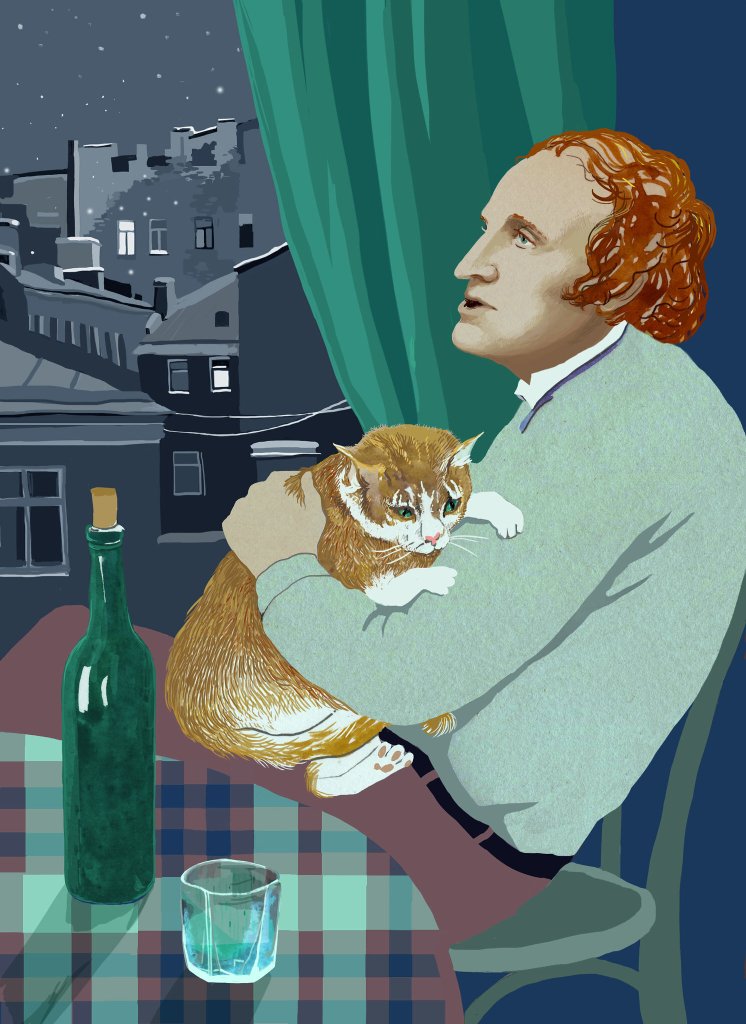
JOSEPH BRODSKY
Don’t leave your room, don’t commit that fateful mistake.
Why risk the sun? Just settle back at home and smoke.
Outside’s absurd, especially that whoop of joy,
you’ve made it to the lavatory–now head back straight away!
…
Don’t leave your room, just say you have the influenza.
A wall and table are the most fascinating agenda.
Why leave this place? Tonight you will come home from town exactly as you were, only more beaten down.
1970
“Brodsky with a cat”, artwork by bogema
We already explored how the dark side of the city reveals a complex tapestry of visual, cultural, and psychological elements. It’s a world where the grandeur and spectacle of urban life coexist with the alienation and oppression it can impose on us. As we continue to live and create in these urban landscapes, we’re always learning, reinterpreting, and reshaping our understanding of the cities we call home.

Sign up for our freshly baked posts
Get the latest culture, movie, and urban life updates sent to your inbox.
Subscribe
Join a bunch of happy subscribers!
 POSTMODERN PROMETHEUS
You must be logged in to post a comment.